
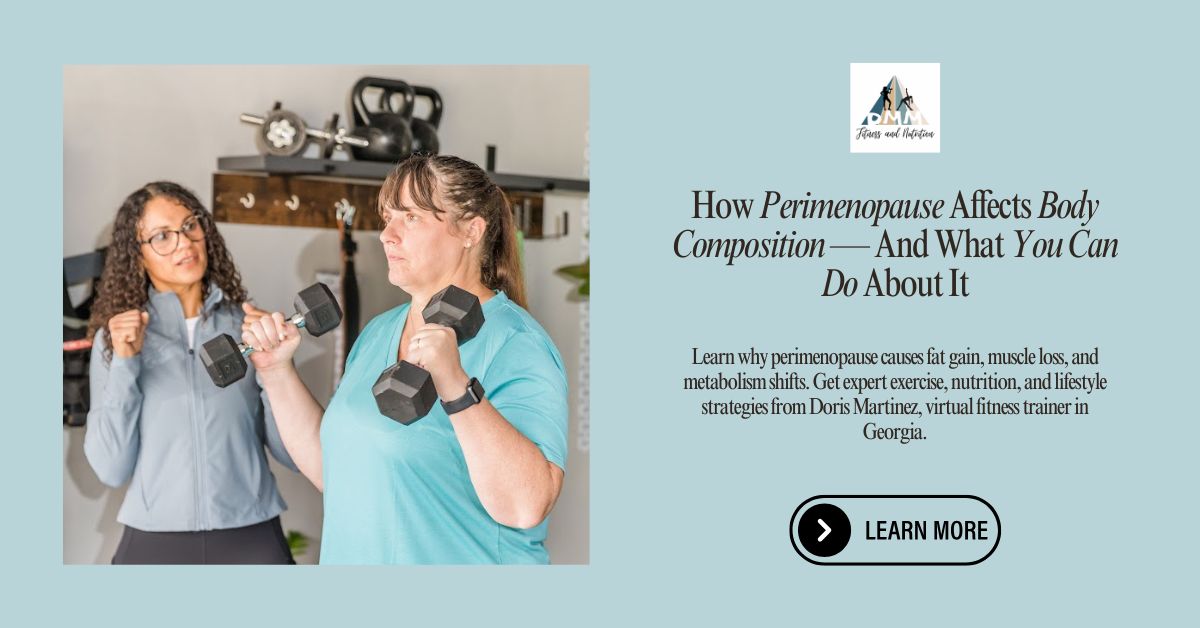
How Perimenopause Affects Body Composition — And What You Can Do About It
In my last post, Perimenopause 101: What It Is, Symptoms, and How to Navigate the Transition with Strength, we explored what perimenopause is and how to recognize its early signs.
Now, let’s dive deeper into one of the biggest frustrations women often share with me during this stage: changes in body composition.
If you’ve noticed that your jeans fit differently, your muscle tone feels softer, or fat seems to gather around your midsection no matter what you do—you’re not alone. These changes are common during perimenopause. But the truth is, you have more control than you may think.
Why Body Composition Changes During Perimenopause
- Hormonal Shifts
Fluctuations in estrogen and progesterone directly affect how your body stores fat and maintains muscle. Higher cortisol from stress can also encourage belly fat storage. - Slower Metabolism
Resting metabolic rate naturally slows with age, which means the same eating habits can now lead to weight gain. - Muscle Loss (Sarcopenia)
Without strength training, women can lose 3–8% of muscle mass per decade after 30, leading to less strength and a slower metabolism. - Fat Redistribution
Fat often shifts from hips and thighs to the midsection, even if overall weight hasn’t changed much.
The Health & Confidence Impact
Body composition isn’t just about how you look—it affects how you feel and how your body functions. These changes can increase risks for:
- Osteoporosis
- Insulin resistance and type 2 diabetes
- Heart disease
On top of that, watching your body change despite your efforts can be discouraging. But with the right strategies, you can keep your health and confidence strong.
Exercise Strategies That Work
- Strength Training
This is non-negotiable. Lifting weights or resistance training is the best way to maintain lean muscle, strengthen bones, and keep your metabolism active. - Hormone-Friendly Cardio
Swap endless hours of high-intensity cardio for walking, cycling, or swimming. These support cardiovascular health without spiking cortisol. - Mobility & Corrective Training
My clients know I emphasize mobility and corrective exercise to protect joints and prevent injury, ensuring they can train for years to come.
Nutrition Strategies to Support Body Composition
- Prioritize Protein: Builds and preserves muscle.
- Balance Blood Sugar: Whole foods and fiber-rich meals keep energy steady and cravings in check. (If you missed it, my blog on Breaking the Sugar Habit dives deeper into this.)
- Healthy Fats Matter: Omega-3s, nuts, seeds, and avocado all support hormones and brain health.
- Hydrate & Nourish: Micronutrients are just as important as macros during this season.
- Follow the 80/20 Rule: I coach my clients to focus on sustainable, balanced eating—not restriction.
Lifestyle & Recovery
- Stress Management: Chronic stress raises cortisol, making it harder to shed fat. Simple daily practices like walking, journaling, or breathwork help.
- Sleep Like It’s Your Job: Quality sleep balances hormones, curbs cravings, and restores energy.
- Consistency Over Perfection: It’s not about quick fixes. It’s about steady, sustainable changes that support your long-term health.
Frequently Asked Questions
Why does body composition change during perimenopause?
Hormonal shifts—especially changes in estrogen, progesterone, and cortisol—affect how your body stores fat, maintains muscle, and regulates metabolism.
Is weight gain during perimenopause normal?
Yes, especially around the midsection. Many women notice increased belly fat and changes in muscle tone during this stage.
Why does fat move to the stomach area during perimenopause?
Changes in estrogen levels can shift fat storage patterns from the hips and thighs toward the abdomen.
Can strength training help during perimenopause?
Absolutely. Strength training helps preserve muscle mass, support metabolism, improve bone density, and maintain body composition.
Is cardio still important?
Yes, but too much high-intensity cardio may increase cortisol. Hormone-friendly options like walking, swimming, and cycling are often more supportive.
Why is muscle loss a concern after 40?
Loss of muscle mass slows metabolism, reduces strength, and can increase the risk of injury and long-term health issues.
What foods help support body composition during perimenopause?
Protein-rich meals, healthy fats, fiber, and nutrient-dense whole foods help stabilize blood sugar, support hormones, and maintain lean muscle.
Can stress affect body composition?
Yes. Chronic stress raises cortisol, which may increase fat storage—especially around the midsection—and make recovery more difficult.
Does sleep really impact fat loss and hormones?
Absolutely. Poor sleep can increase cravings, disrupt hormones, reduce recovery, and negatively affect metabolism.
Can women improve body composition during perimenopause?
Yes. With proper strength training, balanced nutrition, stress management, and recovery strategies, women can absolutely improve strength, energy, and body composition.
Conclusion
Perimenopause brings unique challenges, but it doesn’t mean losing control of your body. By prioritizing strength training, balanced nutrition, and mindful recovery, you can feel strong, confident, and resilient through this stage—and beyond.
If you’re ready for guidance, I specialize in helping women in perimenopause and beyond through virtual fitness classes, small group training in Georgia, and functional nutrition coaching designed to support your body and lifestyle.
👉 Stay tuned for my next blog, where I’ll share strategies for managing hot flashes, night sweats, and sleep challenges naturally—another common struggle during this season of life.
Hi,
I just published an article that dives into the fascinating world of MDMA-assisted therapy—going beyond its party-drug reputation to highlight its powerful potential for treating PTSD, anxiety, and depression. The piece breaks down in simple terms how MDMA affects the brain and body, why it helps people feel safe enough to process trauma, and how clinical trials in Canada are showing life-changing results. Readers will also find inspiring real-life stories of healing, plus an inside look at what legalization and access could look like in the near future.
Your audience could benefit from this resource as it combines science, personal stories, and practical insights into one of the most exciting breakthroughs in mental health today. If you think it’s a good fit, I’d be so grateful if you could consider linking [https://psychedelicplugonline.com/product/buy-dxm-powder/] to it as a helpful reference for your readers.
Thanks so much for your time and consideration!
Best,
Psychedelic Plug Online