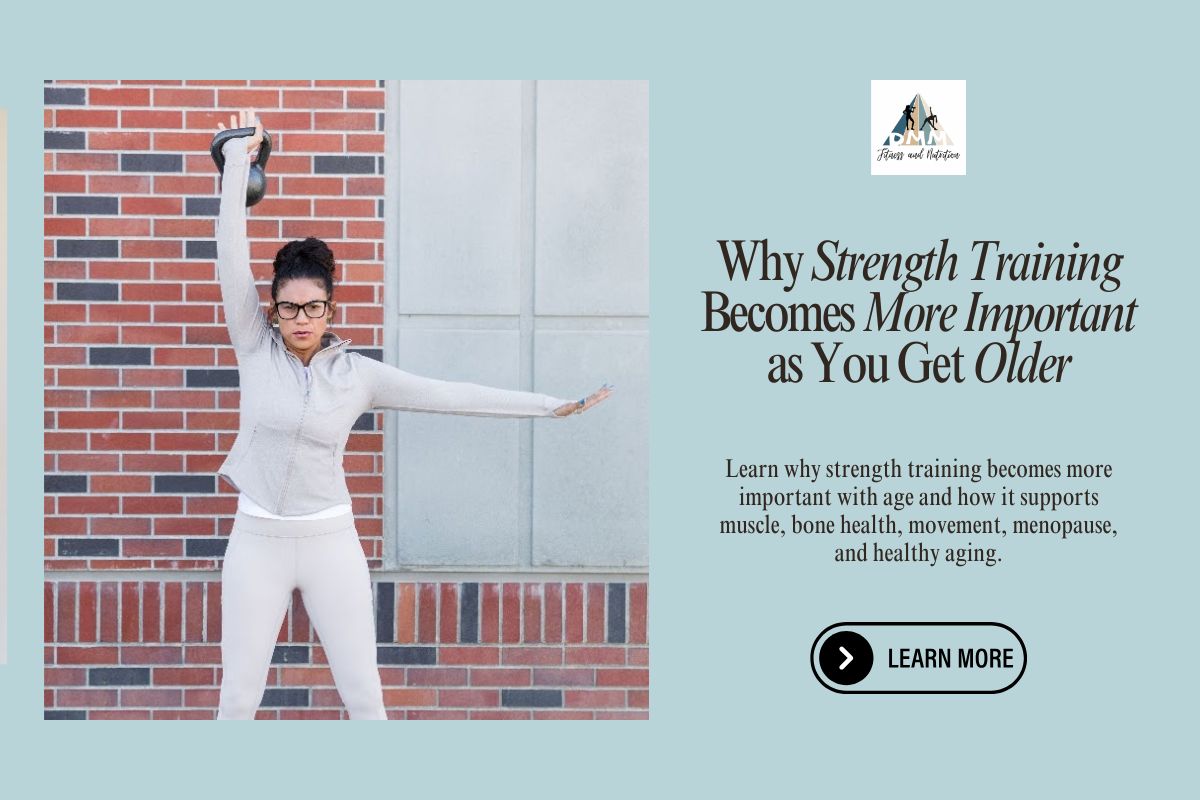
Why Strength Training Becomes More Important as You Get Older
Getting older changes your body, but it doesn’t mean you have to accept becoming weaker, less active, or less confident in what your body can do.
In fact, strength training can become more important as you get older—not less.
I’m Doris Martinez, founder of DMM Fitness & Nutrition. As a personal trainer and wellness coach, I work with women and adults at different stages of life, and one thing I want people to understand is that strength training isn’t reserved for bodybuilders, athletes, or people who have spent their entire lives in a gym.
Strength training can be for a woman in her 40s noticing that her body doesn’t respond to exercise the way it once did. It can be for someone moving through perimenopause or menopause. It can be for someone in their 50s or 60s who wants to maintain strength and stay active.
And it can absolutely be for an older adult who wants to continue traveling, gardening, playing with grandchildren, carrying groceries, enjoying hobbies, and doing everyday things independently.
The goal isn’t necessarily to lift the heaviest weight in the room.
The goal is to build a stronger body for the life you want to continue living.
Strength Training Isn’t Just About Building Bigger Muscles
When people hear “strength training,” they often picture barbells, heavy weights, and intense workouts in a crowded gym.
That’s only one version of it.
Strength training simply means asking your muscles to work against resistance. Depending on your current fitness level, that resistance might come from dumbbells, resistance bands, exercise equipment, your own body weight, or other appropriate forms of resistance.
What matters most is that the exercise is appropriate for you.
The amount of resistance, number of repetitions, exercise selection, and difficulty can all be adjusted according to your current abilities and goals.
That’s one of the advantages of working with a personal trainer in Evans, GA rather than trying to copy a workout designed for someone else.
Two people can be the exact same age and need completely different workouts.
Your birthday doesn’t tell me everything about your fitness level.
Your starting point does.
Why Does Strength Become More Important as We Age?
Our bodies don’t remain exactly the same throughout adulthood.
Muscle mass and strength can gradually decline with age, particularly when we’re inactive. For women, midlife can bring additional changes as perimenopause and menopause enter the picture.
That’s why I don’t think we should wait until we feel “old” before thinking seriously about strength.
Building and maintaining strength is something we can work on throughout adulthood.
If you’re in your 40s, you’re not too young to think about healthy aging.
If you’re in your 60s or 70s, you’re not automatically too old to start becoming stronger.
There is a lot of life between those points.
And that’s why strength training for older adults isn’t only about exercise. It’s about preparing your body for the life you still want to live.
Strength Training for Women Over 40
Your 40s can be an important time to reconsider what “being fit” actually means.
For many women, exercise in their 20s and 30s may have centered heavily around calories, cardio, weight loss, and the number on the scale.
Then midlife arrives.
Your priorities may begin to change.
Instead of asking only, “How much do I weigh?”, I encourage women to start asking some different questions:
How strong am I?
How well am I moving?
Am I maintaining muscle?
Can I comfortably perform the activities I enjoy?
What am I doing today to support how I want to feel 10, 20, or 30 years from now?
I’ve written before about why muscle matters more than weight in your 40s and beyond.
That’s an important shift in the way we think about fitness for women over 40.
Your fitness goals don’t have to disappear as you age.
Sometimes they simply need to evolve.
Strength Training During Perimenopause and Menopause
For many women, getting older also means eventually entering perimenopause and menopause.
This is another reason strength deserves attention.
Changes during this stage of life can affect how women think about muscle, bone health, body composition, recovery, energy, and exercise.
That doesn’t mean you should fear menopause or assume your strongest years are behind you.
Instead, this can be an opportunity to become more intentional about the way you train.
If you’re going through this stage of life, read more about strength training for women during perimenopause and beyond.
Rather than responding to every change in your body by simply exercising harder or eating less, consider whether your routine is helping you become stronger.
For women exploring women’s fitness in Evans, GA, I want the conversation to be about more than burning calories.
Strength, recovery, consistency, mobility, nutrition, and overall wellness all deserve a place in that conversation.
Muscle Matters Beyond Appearance
When I talk about maintaining muscle, I’m not talking only about appearance.
Think about how often you rely on strength throughout an ordinary day.
You use strength when you get up from a chair, carry groceries into your home, pick something up from the floor, climb stairs, carry luggage, work around your house, garden, play with children or grandchildren, or participate in sports and hobbies.
None of those things are bodybuilding competitions.
They’re everyday life.
That’s what I want people to remember when they tell me they aren’t interested in “building muscle.”
You may not care about having visibly bigger muscles.
But you probably care about being able to continue doing the things you enjoy.
That’s a completely different reason to become stronger.
Strength and Bone Health Belong in the Same Conversation
Healthy aging isn’t only about muscle.
Bone health deserves attention too, particularly for women as they move through midlife and beyond.
Resistance and weight-bearing exercise can be part of an overall lifestyle that supports bone health, alongside appropriate nutrition and other healthy habits.
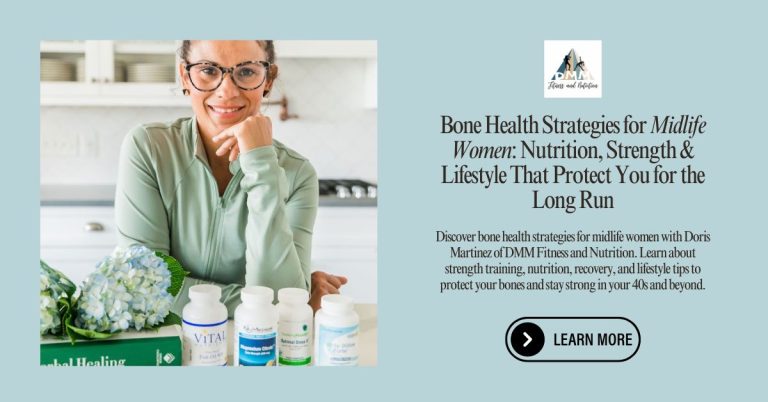
I’ve covered this more deeply in my article about bone health strategies for midlife women.
This is another reason I don’t want women to think about exercise purely in terms of weight loss.
There are much bigger reasons to become strong.
Strength Can Help You Train for Everyday Life
Strength is only one part of physical fitness.
As we get older, mobility, flexibility, coordination, balance, and confidence in movement can become increasingly meaningful too.
These areas don’t exist independently of each other.
Stronger legs, for example, are useful when you’re getting up from a chair, climbing stairs, or walking uphill.
Upper-body strength matters when you’re carrying, lifting, pushing, and pulling.
Core strength contributes to the way you stabilize your body during movement.
This is where I like to think in terms of functional fitness.
Instead of exercising only to become better at exercising, you’re training your body to support the things you do outside your workouts.
That’s an important part of both strength training for women over 40 and strength training for older adults.
You Don’t Have to Exercise Like You Did at 25
One mistake people make as they get older is believing they have only two choices:
Train extremely hard like they did when they were younger—or stop challenging themselves.
There’s a lot of room between those extremes.
A good fitness program should be able to change with you.
Exercises can be modified. Resistance can be increased or decreased. Training volume can change. Recovery can become a bigger priority.
Your workout can reflect your current fitness level rather than the fitness level you had 20 years ago.
That doesn’t mean your workouts have to become easy.
It means they should become appropriate.
There’s an important difference.
Personal Training Can Make Strength Training More Individual
One reason people avoid strength training is simple:
They don’t know what to do.
You walk into a gym and see rows of machines, dumbbells, cables, benches, and equipment. If nobody has shown you what to do, it can feel intimidating.
That’s where personal training in Evans, GA can offer another option.
With personalized coaching, your workout doesn’t have to be based on what the person next to you is doing.
I can look at your current abilities, experience, goals, comfort level, and schedule and build from there.
For women who want more individual attention, personal training for women in Evans, GA can provide a more personalized approach than trying to figure everything out alone.
If you’re completely new to strength training, we can start gradually.
If you’ve been exercising for years, your training can be appropriately challenging.
The goal isn’t to make you fit into the workout.
The workout should fit you.
Private Personal Training Can Remove the Gym Barrier
There’s another reason some people don’t strength train consistently.
They simply don’t enjoy going to a gym.
Maybe you don’t like crowds. Maybe you don’t feel comfortable exercising around other people. Maybe you don’t know how to use the equipment.
Or maybe driving somewhere, parking, exercising, and driving home turns a 45-minute workout into a much bigger commitment.
That’s why my approach to private personal training in Evans, GA is different.
I come to you.
You don’t need an elaborate home gym. We can discuss your available space, equipment, abilities, and goals and determine what makes sense.
My one-on-one personal training gives you individualized attention without requiring you to navigate a crowded gym.
For busy women, that convenience can make consistency much more realistic.
What About Women’s Fitness Classes?
Not everyone wants private training.
Some women enjoy exercising with other people and find the community and energy of a class motivating.
That’s perfectly fine too.
The important question isn’t whether private training or women’s fitness classes in Evans, GA are universally better.
It’s which environment helps you exercise consistently, appropriately, and confidently.
Some women prefer the individualized attention of private coaching.
Others enjoy group fitness.
And some people benefit from combining different forms of exercise throughout the week.
DMM Fitness & Nutrition offers different training approaches because fitness shouldn’t be one-size-fits-all.
Your goals, personality, schedule, experience, and preferences matter.
Recovery Becomes Part of the Strength Strategy
More exercise isn’t automatically better exercise.
Your body needs opportunities to recover and adapt.
This becomes particularly important when you’re balancing workouts with work, family responsibilities, stress, sleep, and everything else happening in your life.
I’ve discussed why recovery matters more after 35 because progress doesn’t depend solely on what happens during your workout.
What happens between workouts matters too.
That connects directly to my recent article, How Often Should You Meet With a Personal Trainer in Evans, GA to See Progress?.
You don’t have to squeeze every possible exercise into one exhausting session.
A consistent routine that allows appropriate training and recovery can make much more sense than repeatedly doing too much and then stopping.
“I’ve Never Lifted Weights. Is It Too Late?”
No.
You don’t need decades of strength-training experience to begin.
And you certainly don’t have to “get in shape” before you work with a trainer.
That’s backwards.
You start with what you can do today, and then you build from there.
Someone completely new to strength training may begin with basic movements and lighter resistance while learning technique and developing confidence.
Someone who has trained consistently for years may require a completely different challenge.
That’s why I don’t believe age alone should determine someone’s workout.
Strength Training in Your 60s, 70s and Beyond
Strength doesn’t suddenly stop mattering when you reach a particular birthday.
In many ways, the reasons for maintaining strength can become even more meaningful.
Think about what you want your life to look like as you get older.
Maybe you want to continue traveling.
Maybe you want to work in your garden.
Maybe you want to walk around your neighborhood.
Maybe you want to stay active with your family.
Maybe you simply want to continue doing as much for yourself as possible.
This is where strength training for seniors and strength training for older adults can take on a very practical purpose.
But older adults aren’t one single fitness category.
One 70-year-old may have exercised consistently for decades.
Another may be beginning structured exercise for the first time.
They shouldn’t automatically receive the same workout simply because they’re the same age.
Training should consider the person.
If you have a medical condition, recent injury or surgery, or concerns about beginning exercise, speak with your healthcare professional about what’s appropriate for you.
Strength Training and Maintaining Independence
Think about what independence means in everyday life.
It might mean carrying your own groceries.
Getting out of a chair.
Going up and down stairs.
Traveling.
Taking care of your home.
Enjoying hobbies.
Keeping up with your family.
Strength training can’t guarantee that nothing will change as you age, and no responsible fitness professional should promise that.
But maintaining your physical abilities is a worthwhile goal throughout adulthood.
That’s why I want people to stop seeing strength training as something that’s only about appearance.
It can also be about what you want your body to continue being able to do.
Do You Need a Gym to Get Stronger?
No.
A traditional gym can be an excellent option for someone who enjoys that environment, knows how to use the equipment, and consistently goes.
But it’s not your only option.
Strength training can incorporate dumbbells, resistance bands, body weight, and other forms of resistance depending on your needs and goals.
If you prefer individual guidance, working with a personal trainer in Evans, GA can give you a more personalized starting point.
And because I offer mobile private training, you don’t necessarily have to leave home to begin.
You don’t need a room filled with exercise equipment.
You need an appropriate plan and a willingness to start.
Strength Training Is an Investment in Your Future Self
One of the reasons I’m passionate about strength training is because I want people to think beyond today’s workout.
Ask yourself:
What would I like to still be doing 10 years from now?
How about 20 years from now?
Traveling? Gardening? Walking on the beach? Playing golf or pickleball? Keeping up with grandchildren? Living an active life?
The answer will be different for everyone.
But your fitness routine today can be built around supporting the kind of life you’d like to continue enjoying.
That’s why women’s fitness in Evans, GA shouldn’t be only about losing pounds before a vacation or trying to fit into a smaller clothing size.
There’s a much bigger picture.
We’re building strength for life.
Frequently Asked Questions About Strength Training and Aging
At what age should I start strength training?
There isn’t one magic age. Adults can benefit from resistance exercise at many stages of life. The appropriate exercises, resistance, and intensity should reflect your current abilities, experience, goals, and health considerations.
Is strength training important for women over 40?
Yes, strength training can become particularly valuable during midlife as women focus on maintaining muscle, supporting bone health, staying active, and adapting their exercise routines as their bodies change. You can learn more about strength training for women over 40 and during perimenopause.
What about strength training during menopause?
Perimenopause and menopause can be a good time to reconsider how you’re exercising. Strength training can be one component of a broader fitness approach that also considers recovery, mobility, nutrition, sleep, and overall wellness.
Do I have to lift heavy weights?
No. Resistance can come from dumbbells, bands, machines, body weight, and other methods. The appropriate amount of resistance depends on the individual.
How often should I strength train?
There isn’t one schedule that’s right for everyone. Training frequency depends on your goals, experience, program structure, other physical activity, recovery, and schedule. Read my guide to how often you should meet with a personal trainer in Evans, GA for a deeper look at consistency and training frequency.
Can beginners start strength training later in life?
Yes. You can start gradually with exercises and resistance appropriate to your abilities. You don’t need previous gym experience before beginning a strength-training program.
Can a personal trainer help me learn strength training?
Yes. A personal trainer in Evans, GA can provide guidance with exercise selection, technique, modifications, progression, and workout structure.
Do I need a gym for personal training?
Not necessarily. With my private personal training in Evans, GA, I come to you. We can discuss your space, available equipment, fitness level, and goals and determine an appropriate approach.
Your Age Doesn’t Define What You’re Capable of Doing
I don’t want you to look at another birthday as a reason to give up on becoming stronger.
Look at it as another reason to take care of the body that’s carrying you through your life.
Your workout at 45 may not look exactly like your workout at 25.
Your workout at 65 may not look exactly like your workout at 45.
And your workout at 75 doesn’t have to look like anyone else’s.
That’s okay.
Fitness is supposed to evolve with you.
The goal isn’t to compete with the person you used to be—or with anyone else.
The goal is to keep building strength for the person you are today and the life you want to keep living tomorrow.
Ready to Get Stronger?
If you’re looking for personal training in Evans, GA, I’d love to help you find a starting point that makes sense for you.
At DMM Fitness & Nutrition, I work with women and adults at different stages of life, from women navigating their 40s, perimenopause, and menopause to older adults who want to continue building strength and staying active.
Whether you’re interested in personal training for women in Evans, GA, women’s fitness classes in Evans, GA, or one-on-one personal training, we’ll start with where you are today.
And with my private training, there’s an important difference:
You don’t have to come to me. I come to you.
Contact DMM Fitness & Nutrition at (915) 740-8622 to get started.