Why You Wake Up at 3AM During Perimenopause (And Why It Leaves You Anxious the Next Day)
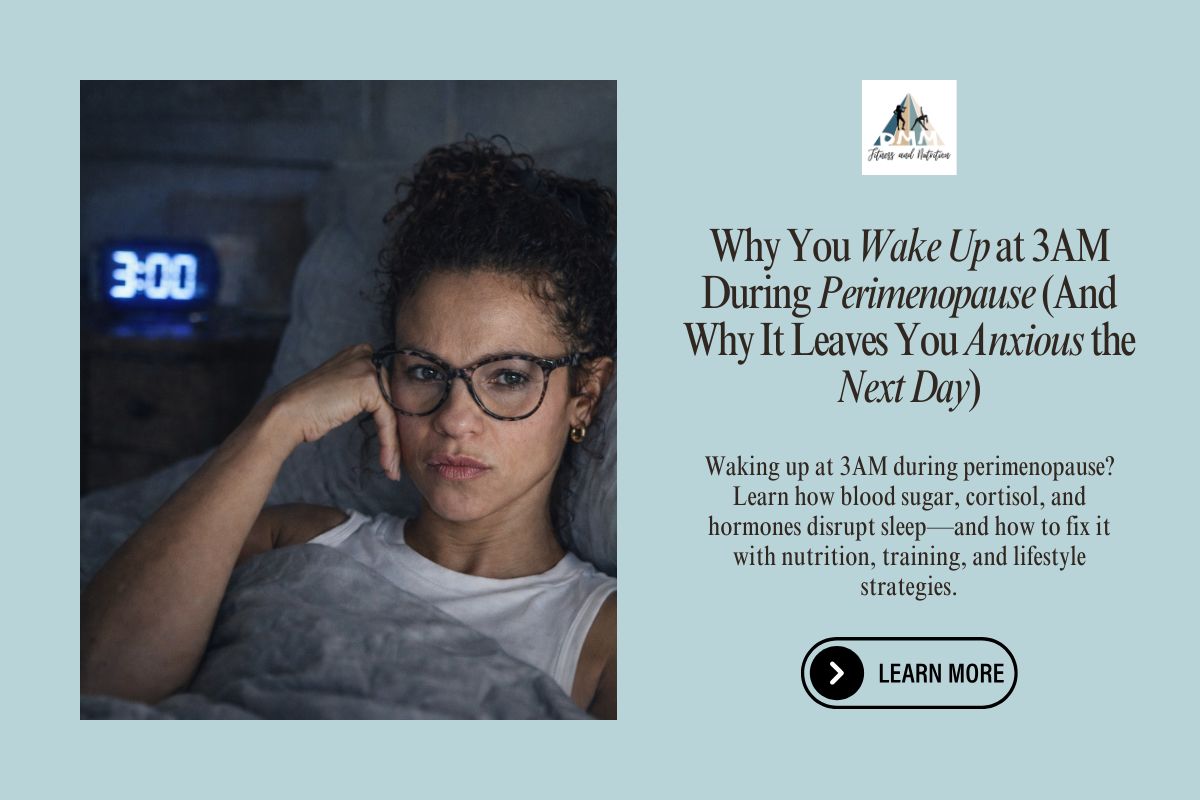
Waking up at 3AM during perimenopause is one of the most frustrating—and confusing—symptoms women experience.
You fall asleep fine… but then suddenly you’re wide awake.
Your mind starts racing. Your body feels alert. And by morning, you’re exhausted, anxious, and running on fumes.
This isn’t random. And it’s not just “stress.”
It’s your hormones, blood sugar, and nervous system all interacting in ways most women were never taught to understand.
What’s Really Happening at 3AM
That middle-of-the-night wake-up is usually a biological signal, not a coincidence.
1. Blood Sugar Drops Overnight
Your body relies on stable blood sugar while you sleep. During perimenopause, regulation becomes less efficient.
When blood sugar drops too low:
- Your body releases cortisol and adrenaline
- Your brain gets a “wake-up” signal
- You feel alert—even if you’re exhausted
This is closely connected to Blood Sugar Swings and Brain Fog
2. Cortisol Spikes at the Wrong Time
Cortisol should be lowest at night and rise in the morning.
But during perimenopause:
- Cortisol can spike at 2–4AM
- This creates a “wired but tired” feeling
- You wake up anxious or restless
Learn more here: Cortisol, Menopause, and Fat Loss Resistance
3. Progesterone Is Declining
Progesterone is your calming hormone.
As it declines:
- Sleep becomes lighter
- Anxiety increases
- Your ability to stay asleep decreases
This is why symptoms often stack together: Progesterone Decline After 40
Why You Feel Worse the Next Day
That 3AM wake-up doesn’t just affect your night—it carries into your entire day.
You may notice:
- Increased anxiety
- Brain fog
- Cravings for sugar or caffeine
- Low motivation or energy
This cycle is deeply connected to what’s happening in your brain: Why Brain Fog Increases During Perimenopause
The Missing Link: Your Nervous System
Most women try to fix this with diet alone—but your nervous system plays a huge role.
If your body is stuck in fight-or-flight:
- You wake more easily
- You stay alert at night
- You feel anxious the next day
Dive deeper here:
👉 How to Get Out of Fight or Flight
👉 Why Your Nervous System Is the Missing Link in Menopause Weight Loss
What Actually Helps You Stay Asleep
This is where real change happens.
Stabilize Blood Sugar Before Bed
- Eat protein + healthy fats at dinner
- Avoid going to bed under-fueled
- Reduce late-night sugar
Support Your Cortisol Rhythm
- Keep a consistent sleep schedule
- Reduce late-night stimulation
- Avoid intense evening workouts
Train Your Nervous System to Downshift
This is where structured training makes a difference.
Working with a virtual fitness trainer in Evans Georgia or joining women’s fitness classes in Evans Georgia
can help regulate:
- stress response
- recovery
- hormonal balance
If you prefer a more personalized environment, small group training in Evans Georgia
provides structure without overwhelming your system.
Support Your Body Through Nutrition
Sleep issues are rarely just about sleep—they’re metabolic.
Working with a nutrition counselor in Evans Georgia
helps you:
- stabilize blood sugar
- reduce cortisol spikes
- support hormone balance long-term
Fullscript Support for Better Sleep and Hormonal Balance
Nutrition is the foundation—but targeted supplementation can accelerate results.
Through Fullscript, common recommendations include:
- Magnesium → supports relaxation and deeper sleep
- Adaptogens → help regulate cortisol patterns
- Glycine → promotes calm and sleep quality
- B vitamins → support energy and nervous system balance
These are most effective when paired with a structured plan. Shop my favorite supplements and support tools through my Fullscript Dispensary
Final Thoughts
If you’re waking up at 3AM, your body isn’t broken—it’s responding.
Perimenopause changes how your body regulates:
- blood sugar
- cortisol
- sleep cycles
Once you understand the root cause, you can finally fix it.
Frequently Asked Questions
Why do I keep waking up at 3AM during perimenopause?
Common reasons include blood sugar drops overnight, cortisol spikes, progesterone decline, stress load, and a dysregulated nervous system.
Why do I feel anxious when I wake up at 3AM?
When cortisol or adrenaline rises overnight, your body can shift into alert mode. This often feels like anxiety, racing thoughts, or restlessness.
Can low progesterone cause sleep problems?
Yes. Progesterone has calming effects on the nervous system. As levels decline during perimenopause, sleep can become lighter and more easily disrupted.
What helps stop waking up at 3AM naturally?
Balanced evening meals, stable blood sugar, stress management, earlier workouts, magnesium support, and a consistent sleep routine often help.
Can exercise improve 3AM wake-ups?
Yes. The right training plan can improve insulin sensitivity, lower stress, and support healthier cortisol rhythms. Overtraining or intense late-night workouts may worsen symptoms.
Should I eat before bed if I wake up at night?
Some women do better with a balanced dinner or light protein-based evening snack if under-fueling is contributing to overnight blood sugar drops.
Can nutrition coaching help with hormone-related sleep issues?
Yes. Addressing meal timing, blood sugar balance, recovery, and stress patterns can make a major difference.
Ready to Fix the Root Cause?
If you’re tired of:
- waking up exhausted
- feeling anxious for no reason
- dealing with brain fog and energy crashes
It’s time for a structured approach that actually works.
At DMM Fitness & Nutrition, we help women navigate perimenopause with smarter strategies built around hormones, metabolism, recovery, and real-life sustainability.
Whether through:
- personalized coaching
- structured training
- nutrition support
- supplement guidance
you can rebuild energy, balance your hormones, and finally sleep through the night.
Support options through DMM Fitness & Nutrition include:
- virtual trainer in Evans Georgia
- women’s fitness classes in Evans Georgia
- small group training in Evans Georgia
- functional nutrition counselor in Evans Georgia
If you’re ready for a plan that works with your body—not against it—DMM Fitness & Nutrition is here to help.