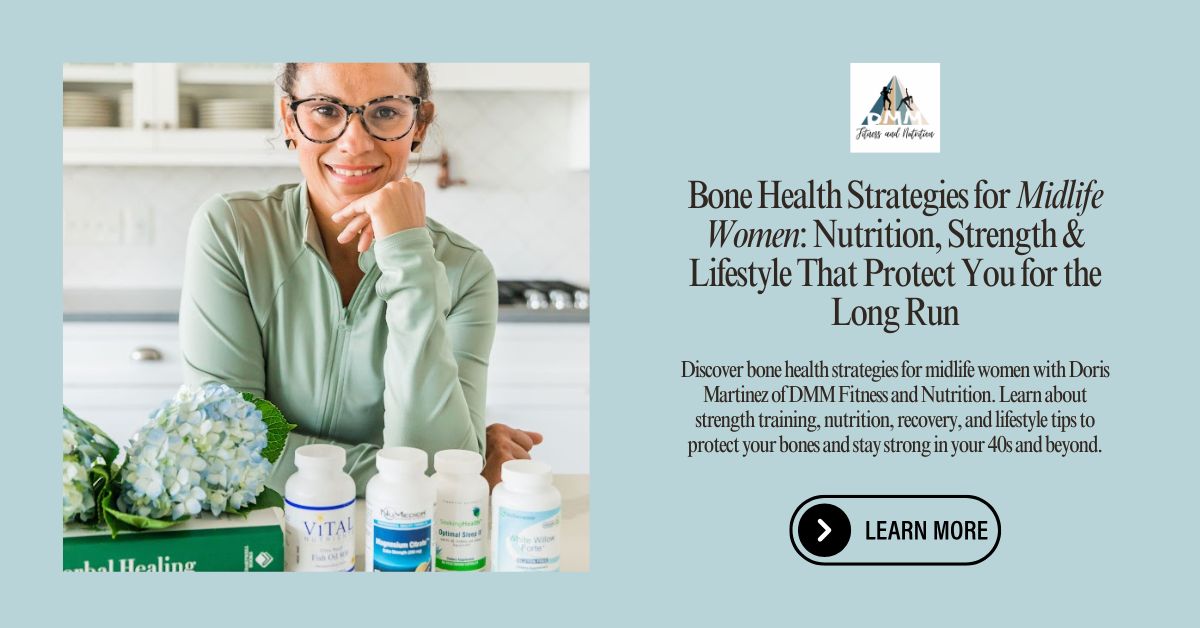
Bone Health Strategies for Midlife Women: Nutrition, Strength & Lifestyle That Protect You for the Long Run
Why Bone Health Matters More After 40
As women transition through perimenopause and menopause, hormone shifts — especially declining estrogen — play a major role in bone density. This natural change increases the risk of osteoporosis, fractures, and joint issues. But here’s the good news: with the right strategies, you can strengthen your bones, protect your mobility, and maintain confidence and independence well into your 40s, 50s, and beyond.
At DMM Fitness and Nutrition, I coach women through practical, science-backed approaches that help you build strength and resilience from the inside out. Let’s explore the pillars of bone health: nutrition, exercise, recovery, supplementation, and lifestyle.
1. Nutrition: Fuel Your Bones From Within
Strong bones aren’t built in the gym alone — they’re also built in the kitchen. A diet rich in bone-supporting nutrients is essential:
- Calcium → from leafy greens, almonds, chia seeds, and fortified plant milks.
- Vitamin D → through sunlight, fatty fish, or high-quality supplements when needed.
- Magnesium → supports calcium absorption and bone density. (See my blog on How Magnesium Supports Hormone Balance, Sleep & Stress).
- Protein → critical for muscle mass, which supports and stabilizes your bones. Learn more from The Power of Protein for Women Over 35.
2. Weight-Bearing Exercise: Strength Training for Strong Bones
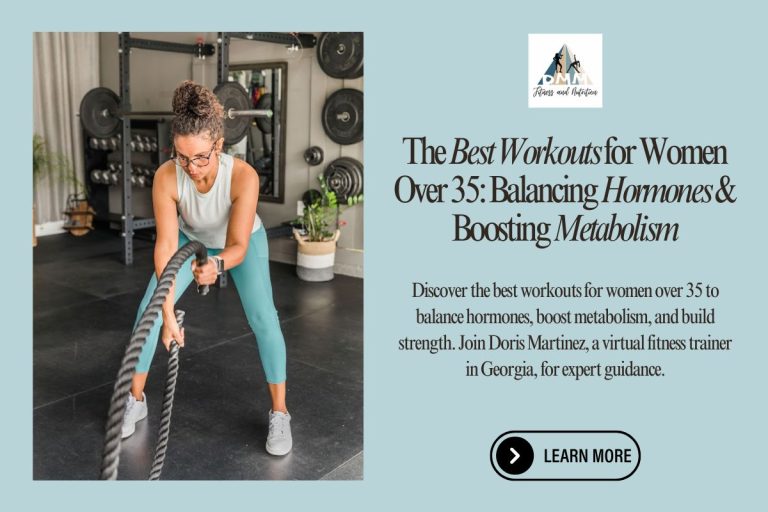
When it comes to protecting bone density, weight-bearing and resistance exercises are non-negotiable. Lifting weights or using resistance bands puts healthy stress on your bones, signaling them to rebuild and stay strong.
In fact, strength training is one of the best tools for women over 40 — not just for aesthetics, but for longevity and vitality. If you missed it, read my blog: Why Strength Training is Essential for Women During Perimenopause and Beyond.
3. Recovery: Rest Builds Stronger Bones Too
Bones, like muscles, adapt and strengthen during recovery — not just during workouts. Sleep is where your body repairs, rebuilds, and rebalances hormones.
If you’ve been underestimating recovery, revisit:
- Strong Rest: Why Recovery Is the Secret Weapon for Women Over 40
- Beyond Rest Days: Tools That Speed Up Recovery After 40
Together, these blogs give you a blueprint for integrating proper rest, mobility, and recovery tools to maximize bone and joint health.
4. Supplementation: Filling the Gaps
Even with clean eating, sometimes you need extra support to protect your bones and hormones. That’s where supplementation can help.
Here are some recommended options available through my Fullscript dispensary:
- K2 D3 Matrix + Magnesium Bis-Glycinate (Cyto-Matrix)
Combines Vitamin D3, Vitamin K2, and Magnesium — ensuring calcium is absorbed effectively and directed into bones, not soft tissue. - Osteo Px (Restorative Formulations)
Includes Vitamins K2, A, D3, boron, and magnesium to support osteocalcin activity, which is vital for bone formation. - Cal/Mag Plus w/ Vit D and K-2 (Metabolic Maintenance)
A well-rounded formula of calcium, magnesium, vitamin D3, and K2 for maintaining strong, healthy bones. - OsteoDura (Amy Myers MD)
Provides multi-mineral support with Aquamin (a marine-source calcium) plus D3 and K vitamins for enhanced absorption and bone strength. - Multi for Women 40+ (MegaFood)
A comprehensive multivitamin with bone-supporting nutrients (D, K, calcium, magnesium), plus added support for hormone and energy balance.
Disclaimer: Always check with your healthcare provider before starting new supplements, especially if you’re on medications like blood thinners.
5. Lifestyle: Daily Habits That Protect Bone Health
Bone health isn’t just about what you eat or lift — it’s also about how you live:
- Limit alcohol & quit smoking → both weaken bones.
- Walk daily → even light impact activities help stimulate bone strength.
- Mind stress → high cortisol can interfere with bone density. Gentle practices like yoga or breathwork can help.
- Hydrate wisely → dehydration can reduce joint lubrication and flexibility. For smart hydration strategies, see Hydrate Like a Pro.
Frequently Asked Questions
Why does bone health become more important after 40?
As estrogen levels decline during perimenopause and menopause, bone density naturally decreases, increasing the risk of osteoporosis and fractures.
Can strength training really improve bone density?
Yes. Weight-bearing and resistance exercises help stimulate bone growth and maintain bone strength over time.
What nutrients are most important for bone health?
Key nutrients include:
- calcium
- vitamin D
- magnesium
- vitamin K2
- protein
These nutrients work together to support bone formation and strength.
Does protein help protect bones?
Absolutely. Protein supports muscle mass, which helps stabilize and protect bones while improving strength and mobility.
Can poor sleep affect bone health?
Yes. Recovery and sleep are critical because the body repairs and rebuilds tissues—including bones—during rest.
Are supplements necessary for bone health?
Not always, but some women benefit from additional support, especially if they are deficient in nutrients like vitamin D, magnesium, or calcium.
What lifestyle habits weaken bones?
Smoking, excessive alcohol intake, chronic stress, inactivity, and poor nutrition can all negatively affect bone density.
Is walking enough for bone health?
Walking is beneficial, but combining it with strength training and resistance exercise provides stronger protection for bone density.
Can stress affect bone density?
Yes. Chronic stress raises cortisol levels, which may interfere with bone-building processes over time.
When should women start focusing on bone health?
Ideally before major bone loss begins. Your 40s are one of the most important times to build habits that protect long-term strength and mobility.
Final Thoughts
Protecting your bones after 40 doesn’t mean slowing down — it means training smarter, eating intentionally, and supporting your body with recovery and lifestyle choices.
When you nourish your body, lift with purpose, and prioritize rest, you’re not just preventing osteoporosis — you’re investing in freedom, independence, and resilience for decades to come.
If you’re ready to get started, join me in virtual fitness classes in Evans, Georgia or try small group training for women who want accountability, strength, and bone-boosting workouts tailored to their needs.
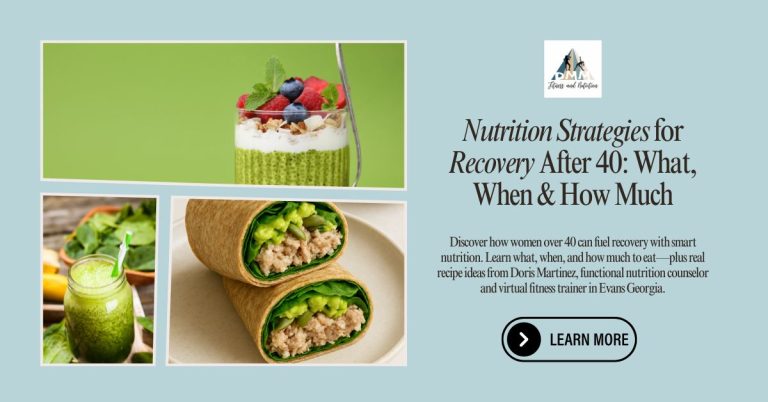
👉 Explore more in my recent post: Nutrition Strategies for Recovery After 40: What, When & How Much