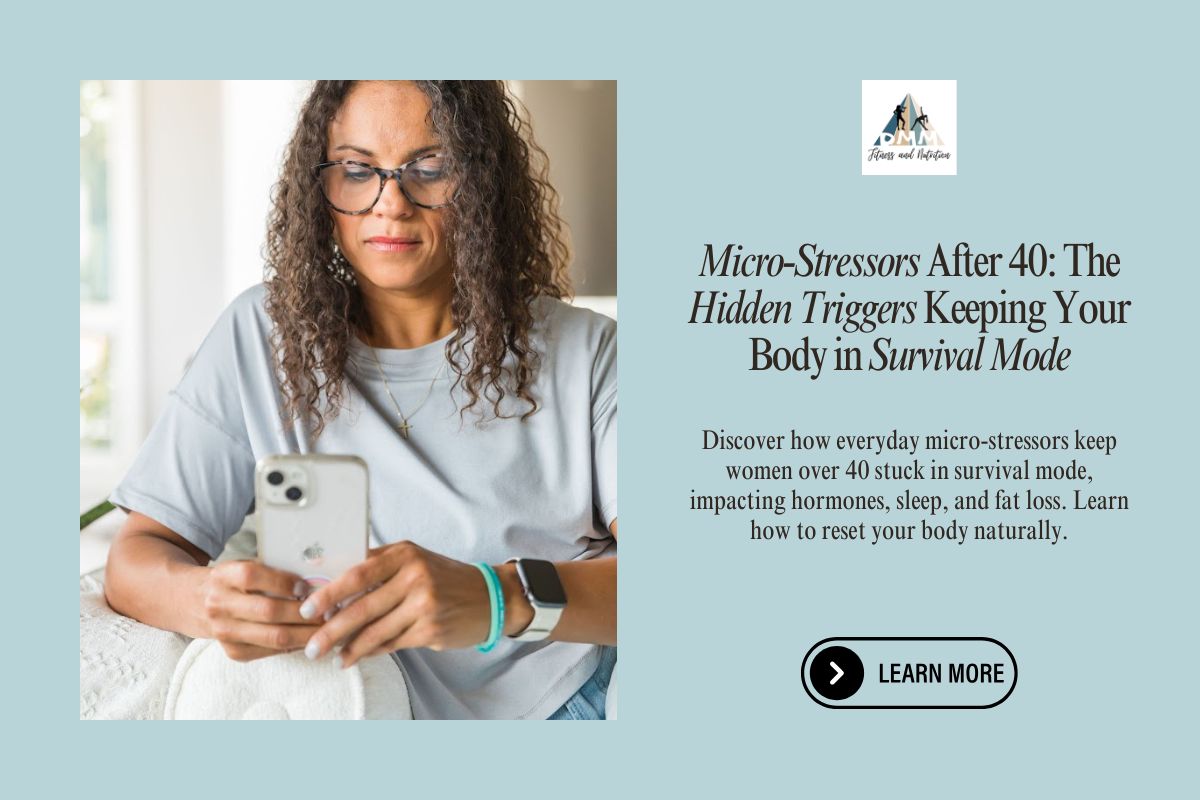
Micro-Stressors After 40: The Hidden Triggers Keeping Your Body in Survival Mode
You’re eating better.
You’re trying to stay consistent with workouts.
You’re doing your best to manage stress.
So why do you still feel:
- constantly tired
- easily overwhelmed
- stuck in fat loss
- wired but exhausted
Here’s what most women don’t realize:
👉 It’s not always the big stress that’s holding you back.
👉 It’s the small, constant stressors happening all day long.
These are called micro-stressors — and after 40, your body becomes far more sensitive to them.
What Are Micro-Stressors?
Micro-stressors are small, repeated triggers that keep your body in a low-level stress response.
Individually, they seem harmless.
But together? They keep your body stuck in survival mode.
Common Micro-Stressors Women Over 40 Experience Daily
You may not even notice these, but your body does:
- Skipping meals or under-eating
- Drinking coffee on an empty stomach
- Constant phone notifications and screen time
- Rushing from one task to the next
- Overtraining or too much high-intensity cardio
- Poor sleep quality
- Negative self-talk or perfectionism
- Not taking time to slow down
👉 Over time, these add up and continuously signal your body to stay alert.
Why This Matters More After 40
Hormonal shifts during perimenopause and menopause change how your body handles stress.
- Progesterone declines → less calming effect on the nervous system
- Cortisol becomes more reactive → easier to stay “on edge”
- Blood sugar becomes less stable → more internal stress signals
If you haven’t yet, read:
👉 Progesterone Decline After 40: Why Anxiety, Poor Sleep & Belly Fat Increase
👉 Cortisol & Menopause: How Chronic Stress Blocks Fat Loss
These break down how hormonal shifts amplify your stress response.
How Micro-Stressors Keep You in Survival Mode
When your body senses constant stress (even small ones), it prioritizes survival over results.
This can lead to:
- Increased belly fat storage
- Slower metabolism
- Sleep disruption
- Cravings and energy crashes
- Brain fog and irritability
👉 Your body isn’t working against you — it’s trying to protect you.
The Hidden Connection to Fat Loss Resistance
Many women think they need:
- stricter diets
- more workouts
- more discipline
But the real issue is often this:
👉 Your body doesn’t feel safe enough to let go of fat.
Micro-stressors keep cortisol elevated, which directly impacts:
- insulin sensitivity
- fat storage
- hunger hormones
For more on this connection, read: Insulin Resistance & Menopause: Why You’re Eating Less but Not Losing Weight
How to Reduce Micro-Stressors (Without Overhauling Your Life)
You don’t need to do more.
You need to remove what’s quietly working against you.
1. Start Your Day Without Immediate Stimulation
Give your nervous system a few minutes before checking your phone.
2. Eat Balanced Meals Consistently
Support blood sugar with protein, healthy fats, and fiber.
3. Rethink Your Workouts
Not every workout needs to be intense.
A structured approach—whether you’re working with a virtual fitness trainer in Evans Georgia
or joining small group training in Evans Georgia can help you train smarter, not harder while reducing stress on your body.
4. Build Small Moments of Recovery Into Your Day
- short walks
- deep breathing
- stepping outside
These signals tell your body it’s safe.
5. Support Your Nervous System
This is often the missing link. How to Get Out of Fight or Flight: 7 Nervous System Reset Practices for Women Over 40
Supplements That May Help Reduce Stress Load
While lifestyle comes first, targeted support can help:
- Magnesium (glycinate or threonate)
- Adaptogens
- Nervous system support formulas
You can access professional-grade supplements through my dispensary: https://us.fullscript.com/welcome/dmmfitnessandnutrition
You Don’t Need More Discipline — You Need Less Stress
This is where many women get stuck.
They push harder…
when their body is asking them to slow down and feel safe again.
Reducing micro-stressors often leads to:
- better sleep
- improved energy
- reduced cravings
- more sustainable fat loss
FAQ: Micro-Stressors After 40
What are examples of micro-stressors?
Small daily habits like skipping meals, constant notifications, rushing, overtraining, and poor sleep.
Can small stress really affect hormones?
Yes. Repeated small stress signals can keep cortisol elevated, which affects hormones, metabolism, and fat storage.
Why does stress feel harder to manage after 40?
Hormonal changes reduce your body’s ability to buffer stress, making you more sensitive to daily triggers.
Do I need to stop exercising to reduce stress?
No—but you may need to adjust intensity and prioritize recovery.
What’s the fastest way to start reducing micro-stress?
Start small:
- eat consistently
- reduce morning phone use
- add short recovery breaks
Final Thoughts
Your body isn’t broken.
It’s responding to everything you’re asking it to handle.
When you reduce the constant stress signals, your body can finally:
- recover
- regulate hormones
- and start working with you again
Ready to Work With Your Body — Not Against It?
If you’re tired of feeling stuck despite doing everything “right,” it’s time for a smarter approach.
Work with a functional nutrition counselor in Evans Georgia or follow a structured plan through a
virtual fitness trainer in Evans Georgia
📞 Call: +1 (915) 740-8622
📧 Email: [email protected]
You don’t need more pressure.
You need the right strategy.