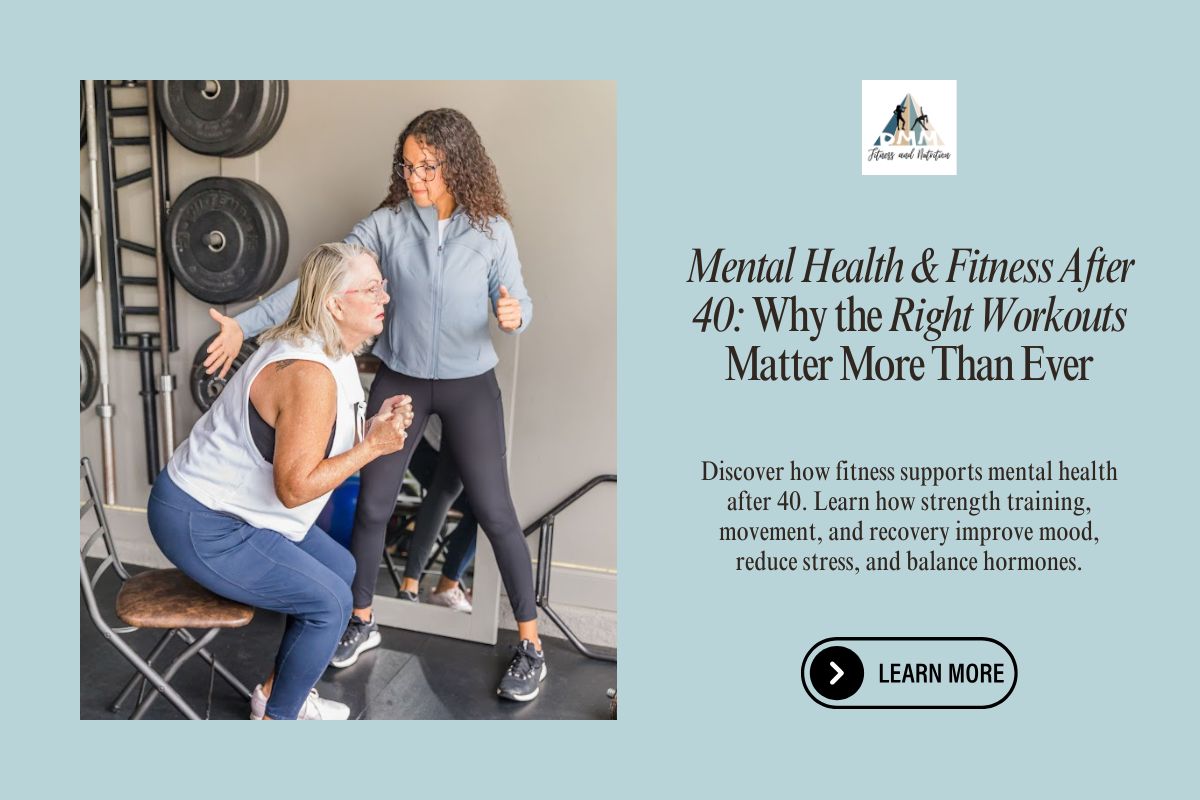
Mental Health & Fitness After 40: Why the Right Workouts Matter More Than Ever
May is Mental Health Awareness Month, and while most conversations focus on mindset, therapy, or stress management—there’s one powerful tool that often gets overlooked:
👉 Your fitness routine
Not just any workout…
but the right kind of training for your body after 40
Because at this stage, your workouts don’t just shape your body—they directly impact your:
- mood
- stress levels
- sleep quality
- hormone balance
- overall mental resilience
The Missing Link Between Fitness and Mental Health
If you’ve been feeling:
- overwhelmed or anxious
- mentally drained
- unmotivated
- constantly tired
It may not just be life—it could be how your body is responding to stress.
Your nervous system and hormones are closely tied to movement.
👉 The right type of fitness can:
- reduce cortisol (your stress hormone)
- improve serotonin and dopamine (your “feel-good” chemicals)
- regulate blood sugar (which stabilizes mood)
- improve sleep quality
But here’s the key: Not all workouts support mental health—especially after 40
Why High-Stress Workouts Can Backfire
Many women believe they need to:
- push harder
- do more cardio
- burn more calories
But overly intense or excessive workouts can actually:
- increase cortisol
- worsen fatigue
- disrupt sleep
- make anxiety feel worse
If this sounds familiar, you’ll relate to: Cortisol & Menopause: How Chronic Stress Blocks Fat Loss
What Type of Fitness Actually Supports Mental Health After 40
The goal isn’t to do more—it’s to train smarter.
1. Strength Training (Foundation for Stability & Confidence)
Strength training isn’t just physical—it’s mental.
It helps:
- build confidence
- improve resilience
- support hormone balance
- reduce anxiety through structured movement
Working with a virtual fitness trainer in Evans Georgia or joining women’s fitness classes in Evans Georgia can help ensure your workouts are effective and supportive—not overwhelming.
2. Low-Impact Movement (Stress Reduction + Recovery)
Simple movement like:
- walking
- mobility work
- light resistance training
can:
- calm your nervous system
- improve circulation
- reduce mental fatigue
This is where consistency matters more than intensity.
3. Structured Training (Removes Mental Overload)
Decision fatigue is real.
When you’re constantly wondering:
- what workout to do
- how hard to push
- if you’re doing it right
…it adds more stress.
Following a structured plan—or working with a virtual trainer in Evans Georgia removes that pressure and allows you to focus on simply showing up.
4. Recovery (The Most Underrated Mental Health Tool)
Recovery is where your body resets.
Prioritizing:
- rest days
- quality sleep
- proper nutrition
helps regulate:
- cortisol
- mood
- energy levels
If you haven’t read it yet: Why Recovery Matters More After 35: Rest, Repair, and Results
The Hormone Connection You Can’t Ignore
After 40, hormonal shifts make your body more sensitive to stress.
- Lower progesterone → less calming effect
- Fluctuating estrogen → mood swings
- Higher cortisol → increased anxiety and fatigue
That’s why your fitness routine must: support your hormones—not fight them
For a deeper understanding: Progesterone Decline After 40: Why Anxiety, Poor Sleep & Belly Fat Increase
Fitness Isn’t Just About Results—It’s About How You Feel
Many women start their fitness journey focused on:
- weight loss
- appearance
- numbers on the scale
But what keeps you consistent is how it makes you feel:
- clearer mentally
- calmer emotionally
- more in control
- more energized
👉 That’s the real transformation
Simple Ways to Start Supporting Your Mental Health Through Fitness
You don’t need to overhaul everything.
Start with:
- 2–3 strength training sessions per week
- daily movement (like walking)
- prioritizing recovery
- reducing high-intensity overload
Consistency beats intensity—every time.
FAQ: Fitness & Mental Health After 40
Can exercise really improve mental health?
Yes. Exercise helps regulate hormones, reduce stress, and increase feel-good neurotransmitters.
What type of exercise is best for stress?
Strength training combined with low-impact movement and proper recovery works best.
Can too much exercise increase anxiety?
Yes. Overtraining can raise cortisol and worsen fatigue and stress.
How often should I work out?
For most women over 40:
- 2–4 structured workouts per week
- plus daily movement
Do I need a trainer?
Not required—but working with a professional can help you avoid overtraining and get better results with less stress.
Final Thoughts
This Mental Health Awareness Month, remember:
Your fitness routine should support your mind just as much as your body.
You don’t need:
- more pressure
- more intensity
- or a stricter plan
You need a strategy that works with your body.
Ready to Train Smarter—Not Harder?
If you’re ready to feel:
- stronger
- more energized
- less stressed
- and more in control
Work with a virtual fitness trainer in Evans Georgia
or join women’s fitness classes in Evans Georgia
📞 Call: +1 (915) 740-8622
📧 Email: [email protected]
Let’s build a plan that supports your body—and your life.