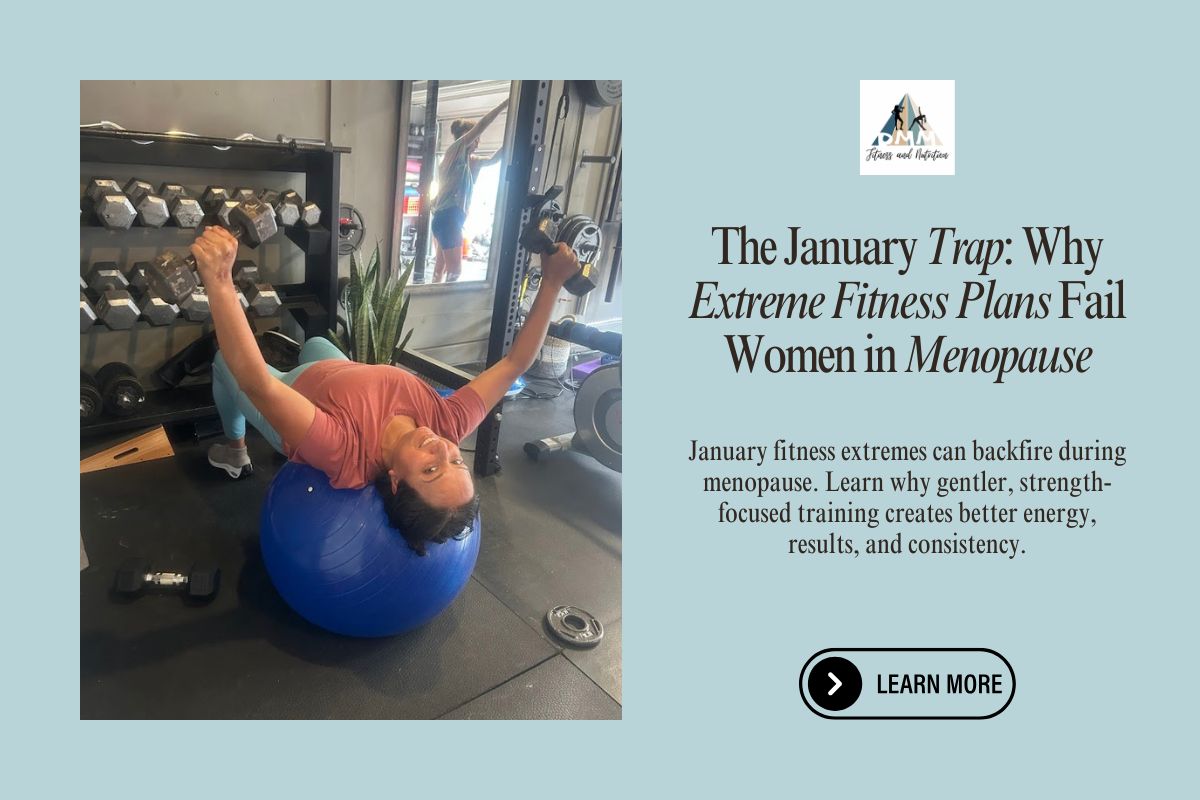
The January Trap: Why Extreme Fitness Plans Fail Women in Menopause
January is peak motivation season. New year, clean slate, big goals.
But for many women in perimenopause and menopause, January also becomes the month where energy crashes, motivation fades, and self-blame creeps in.
Extreme fitness plans — bootcamps, daily HIIT, aggressive calorie cuts — often promise fast results. Yet for women navigating hormonal shifts, these approaches don’t just fail… they backfire.
Let’s talk about why — and what actually works instead.
What the “January Trap” Really Looks Like
The January Trap usually includes some combination of:
- Jumping into intense workouts 5–6 days per week
- Excessive cardio with minimal strength training
- Cutting calories or carbs “to reset”
- Ignoring recovery, sleep, and stress levels
On the surface, it feels productive. Underneath, it creates a perfect storm — especially for women over 35.
Why Menopause Changes the Fitness Rules
Hormonal changes during perimenopause and menopause impact how your body responds to stress — and exercise is a form of stress.
As estrogen and progesterone fluctuate:
- Cortisol becomes harder to regulate
- Muscle recovery slows
- Blood sugar becomes more sensitive
- Inflammation lingers longer
This is why many women experience:
- Fatigue instead of fat loss
- Increased cravings
- Sleep disruption
- Mood changes
- Plateaus despite “doing more”
If this sounds familiar, you’re not failing — your body is asking for a smarter approach.
This connects directly with what I shared in Cold-Weather Cravings: Why They Spike During Perimenopause & What Actually Helps
Signs You’re Caught in the January Trap
You may be overdoing it if you notice:
- Constant soreness that doesn’t improve
- Feeling exhausted by mid-morning
- Increased sugar or caffeine cravings
- Poor sleep despite being “tired”
- Loss of motivation just weeks into January
These are not discipline issues — they’re nervous system and hormone signals.
What Actually Works Instead
For women in perimenopause and menopause, the goal isn’t intensity — it’s adaptation, consistency, and recovery.
That’s why strength training becomes non-negotiable.
Benefits of Strength Training During Menopause
- Preserves lean muscle
- Supports metabolism
- Improves insulin sensitivity
- Protects bone density
- Builds long-term resilience
This is why I emphasize strength-focused programming in my work as a personal fitness trainer and virtual fitness trainer in Evans, Georgia.
How to Structure Weekly Workouts (January-Friendly)
A sustainable January plan might look like:
- 2–3 days of strength training
- Daily walking or light movement
- 1–2 mobility or recovery-focused sessions
- At least 1 full rest day
This structure supports results without burnout — especially important during hormonal transitions.
Choosing the Right Strength Training Format
Not all training styles are created equal. The best option depends on your schedule, support needs, and stress load.
Small Group Strength Training
- Community and accountability
- Personalized coaching without pressure
- Ideal for women who thrive with structure
(Great option if you’re looking for small group training in Evans, Georgia.)
Virtual Strength Training
- Flexible and accessible
- Eliminates commute stress
- Ideal for busy schedules or travel
As a virtual fitness trainer in Evans, Georgia, this allows me to support women consistently without sacrificing quality.
1:1 Personal Training
- Fully customized programming
- Ideal for injury history, chronic pain, or confidence building
- Best for women needing extra support or progression
If you want a deeper breakdown, I covered this in detail in Menopause & Movement: Best Strength Training Formats for January Results
Simple Strength Routine to Try This Week
Try this 20–30 minute session:
- Squats or sit-to-stands
- Dumbbell rows or band rows
- Push-ups (wall, incline, or floor)
- Deadlifts or glute bridges
- Core stability (planks or carries)
Focus on quality, not speed.
The Real January Reset
The real reset isn’t doing more — it’s doing what your body can recover from.
January doesn’t need to be extreme to be effective. When workouts align with your hormones, lifestyle, and stress levels, consistency becomes easier — and results last longer than 30 days.
If you’re looking for:
- Women’s fitness classes in Evans, Georgia
- Virtual fitness classes in Evans, Georgia
- A trainer who understands hormone health, strength training, and sustainable progress
You can explore training options at DMM Fitness and Nutrition
Final Thought
The January Trap convinces women they need to push harder.
Menopause teaches us something different:
Train smarter. Recover better. Stay consistent.
That’s where real results begin.